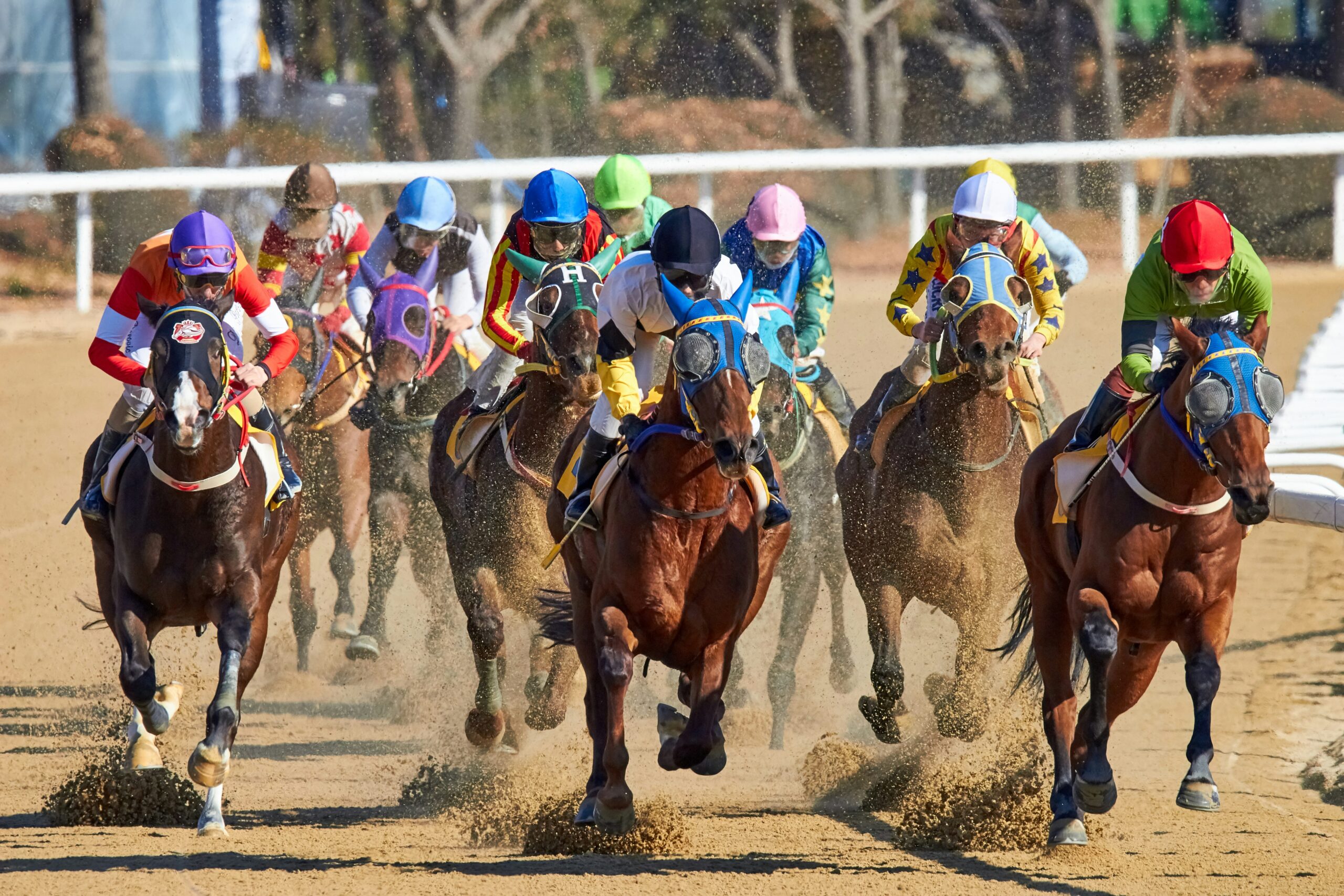
Nine thoroughbreds thundered down the Happy Valley Racecourse...
It was the last leg of Hong Kong's coveted "Triple Trio." The spectators were antsy... clutching their betting slips... hoping for a big payday.
Then Bobo Duck surged past Mascot Treasure, and the crowd erupted. Someone had surely won the staggering $13 million prize.
But all the noise barely registered in the office building across the track. A man named Bill Benter had already called the race... minutes before it ended.
Benter sat silently in his small office suite 27 floors above the turf. Data filtered through a matrix on his glowing screen as he followed the race on November 6, 2001.
A million Hong Kong residents had placed their bets. But only one ticket got it exactly right.
Benter and his colleague Paul Coladonato had made 51,381 wagers on the race...
Once Bobo Duck crossed the finish line, they eyed the winning betting slip, laughed, and took a photo.
For Benter, betting wasn't a matter of luck. It was all about the data... the models... and probability. His success came from making smart bets, not bold ones.
Benter had started off counting cards. A physics student turned Las Vegas regular, he joined a card-counting team that beat the casinos for years – until they blacklisted him.
Hong Kong horse-racing bettors were wagering nearly $10 billion annually by the mid-1990s. The pools were huge, the players mostly uninformed, and the data plentiful. It was the perfect scene for a number cruncher like Benter.
Benter and Coladonato saw the opportunity in horse racing and went right to work. Benter taught himself statistics and coded their first model on a rudimentary PC. They also ran through years of horse-racing data by hand.
The early results were rocky. They lost $120,000 in their first season. So Benter added more variables to the model.
He included rest days, weather conditions, jockey-trainer combinations, and recent finishes. He eventually tracked more than 120 inputs per horse.
Then came the breakthroughs...
By the early 1990s, Benter was pulling in millions of dollars each season...
He rented entire office floors and hired coders, bettors, and statisticians. He even wired his computer systems directly into the Hong Kong Jockey Club's betting infrastructure.
Despite his success, Benter often worried about "gambler's ruin" – the idea that even a winning system can break down if it's poorly managed. So he remained cautious. He carefully sized his bets, ensuring he stayed in the game even during losing streaks.
The Triple Trio was Hong Kong's most elusive horse-racing bet. Who could predict the winners in three consecutive races?
The odds were an astronomical one in several million.
But Benter couldn't resist.
He and Coladonato wagered more than HK$1.6 million that night...
They locked their winning tickets in a safe... and never cashed them. It was the ultimate flex from the men who had quietly and methodically beaten the system.
Benter cracked the betting code by using more data – and better-quality data – than anyone else. He saw hidden variables, sharpened inputs, and eliminated the "noise."
In other words, the better the model, the stronger the edge.
Popular companies like DraftKings (DKNG), FanDuel, and BetMGM leverage thousands of data points to determine accurate odds and betting lines.
They often grab the headlines. But they wouldn't dominate the betting market without one little-known company...
Check back in tomorrow. We'll share the name of the data supplier that supports this entire industry.
And remember... good data is the backbone of sports betting. It's also the key to finding the best under-the-radar investments.
Regards,
Joel Litman
April 13, 2026