Xu Zengping needed $20 million, 50 bottles of 124-proof baijiu, and a convincing cover story...
On paper, he was buying a casino. In reality, he was securing China's first aircraft carrier.
Xu had an unusual resume for a deal like this. Years earlier, he had played basketball for the People's Liberation Army. By the 1990s, he had moved into business in Hong Kong, where much of his work revolved around international sports.
Buying military hardware represented a major career change. But China had good reason to bring him in...
The collapse of the Soviet Union had left military equipment scattered across its former republics. Ukraine wound up with one particularly expensive hand-me-down sitting unfinished in a shipyard.
The ship was called the Varyag. Ukraine had inherited the giant hull. But it couldn't afford the $500 million needed to fix it up.
China saw an opportunity. If the Communist nation bought the ship openly, it could create diplomatic headaches. Xu, however, could pose as a private businessman with a commercial reason to want one.
He could get in and out, no red flags raised.
Xu told Ukraine that he wanted to buy the Varyag and convert it into a floating casino and hotel in Macau. He didn't reveal, of course, that Macau's authorities already told him the vessel was too deep to pull into port.
After a long negotiation process, he managed to secure the frame of the half-built Soviet warship for roughly $20 million. According to accounts of the deal, those 50 bottles of baijiu helped grease the wheels.
At that point, Xu owned an aircraft carrier. But getting it home would make buying it look easy...
The Varyag was in the Black Sea, thousands of miles from China...
To reach its new home, it needed to pass through the Turkish Straits to the Mediterranean... then through the Suez Canal to the Arabian Sea... and then carry on to China.
For a fully operational commerce ship, the trip would have taken four months. But the Varyag was a monstrous piece of military equipment. The Turkish Straits have tight restrictions on aircraft carriers.
Xu may have been calling it a casino... but all Turkey saw was a massive military vessel asking permission to sail past Istanbul.
It took roughly three years before Turkey finally gave the voyage its blessing.
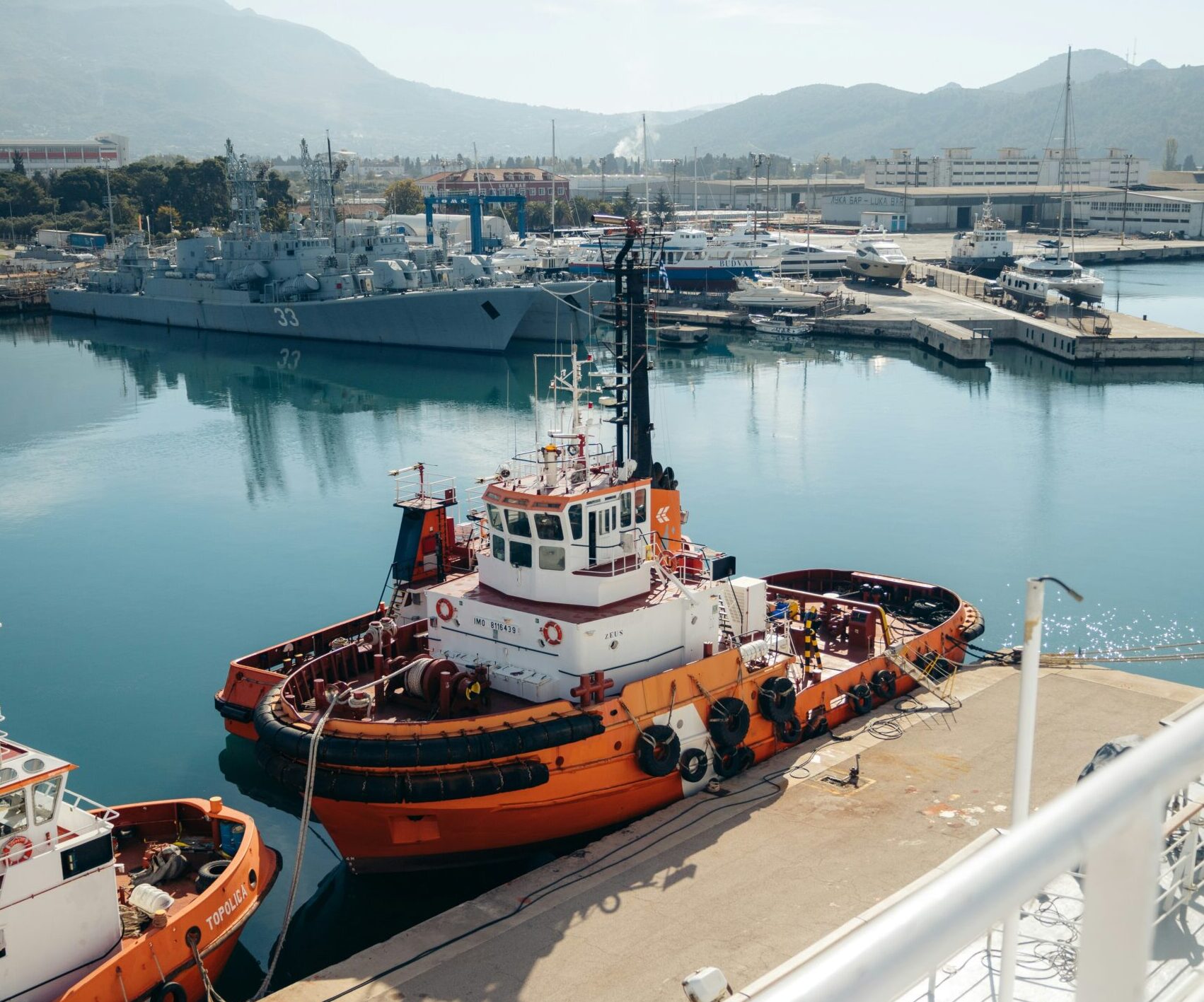
The Varyag had no way to make the trip under its own power. It didn't even have an engine. So tugboats had to haul all its 33,000-ton hull through the Straits and into the Mediterranean.
Once there, a powerful storm near Greece nearly drove the ship aground. Crews managed to regain control and keep moving, only to run into another problem farther south...
Egypt refused to let the Varyag through the Suez Canal under any circumstances. That meant it had to sail around Africa. And what had started as a fairly direct trip from the Black Sea to China became a monthslong voyage around an entire continent.
Every new complication came with another bill. Tugboats, crews, fuel, support vessels, insurance, delays, and thousands of extra miles kept pushing the cost higher.
By the time the Varyag finally reached China, Xu's $20 million purchase had turned into a roughly $120 million undertaking.
And that was the end of the 'fake casino idea'...
The Varyag went into a Chinese naval shipyard, where it eventually became the foundation for China's first aircraft carrier.
As for Xu, the government didn't exactly reward his efforts. Chinese authorities reimbursed the initial $20 million purchase price. But the roughly $100 million he spent getting the carrier to China stayed on his tab because he didn't have receipts.
The moral of the story is... Governments can spend extraordinary amounts of money when defense becomes a priority.
For the companies on the other side of that spending, the outcome is not always obvious. Some defense contractors can turn government demand into strong returns. Others can win huge contracts while absorbing more costs than they should.
Right now, the U.S. is in the midst of a defense 'gold rush'...
The government is spending trillions of dollars on the military. And that spending could explode in the next few years.
But even in a gold rush, not everyone gets rich.
The money flowing into U.S defense is staggering. The 2027 budget proposal requests $1.45 trillion.
But as Xu learned the hard way, being on the receiving end of government spending doesn't guarantee a profit.
Some companies will capture that spending and turn it into shareholder value. Others will win contracts that look impressive on paper... while margins erode in the shadows.
My team and I put together a shortlist of next-generation defense companies in the best spot to win from today's spending. Each of them has strong fundamentals... and a clear path to turn government demand into strong returns.
Learn how to get their names – and why a tidal wave of cash is set to hit by October 12 – right here.
Don't wait too long on this opportunity. When spending accelerates, the market will reprice defense stocks fast.
Regards,
Joel Litman
September 30, 2026