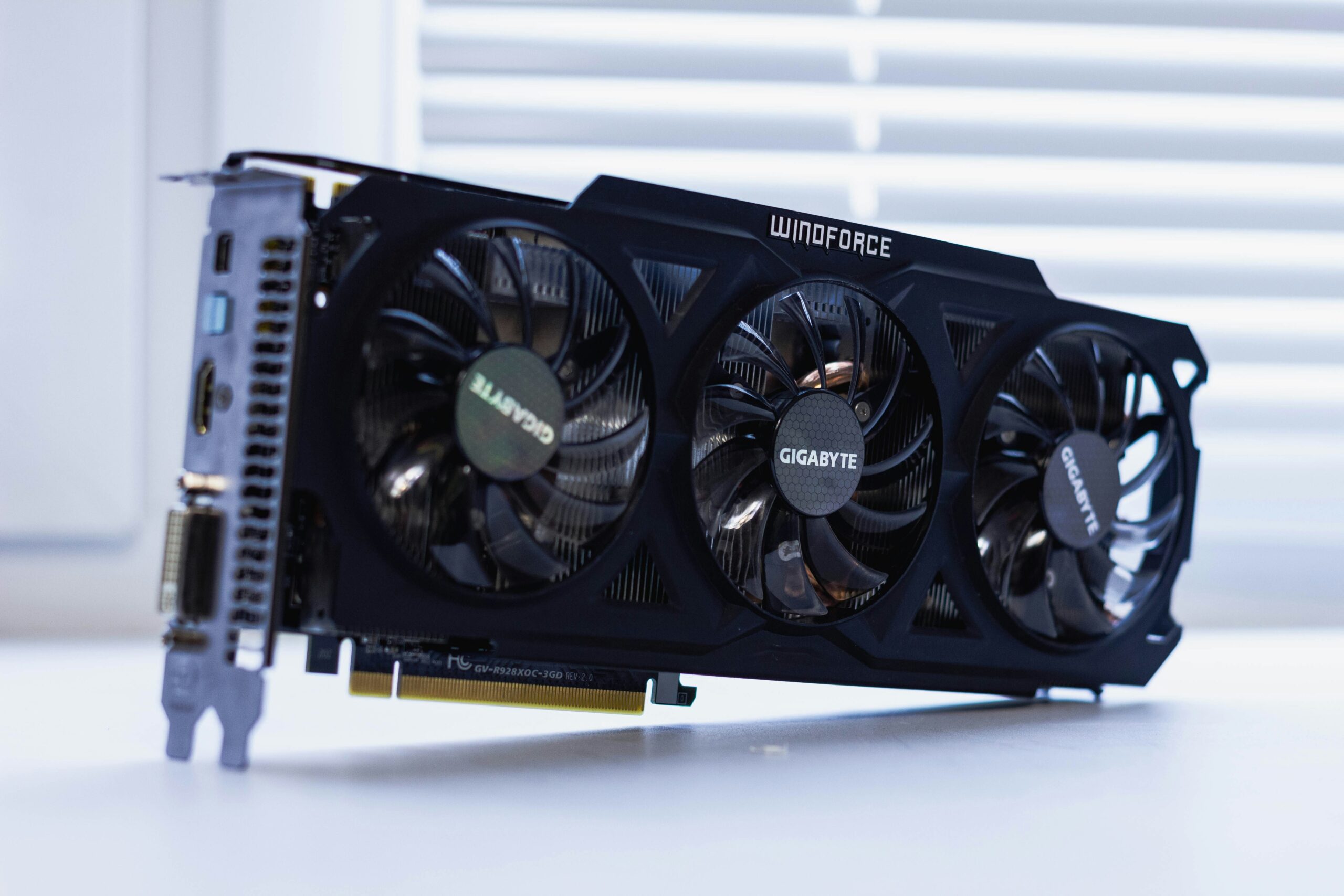
Jensen Huang must have wondered what he did wrong in a past life to end up here...
Since founding Nvidia in 1993, Huang had watched the company go from one near-death experience to another.
Nvidia's first major hurdle came in 1995, when it backed a type of computer-graphic rendering that completely deviated from the industry standard. Within a year, half the company was laid off.
Yet Nvidia adapted quickly and became the leader in graphics chips by the early 2000s. But then came another misstep...
Its newest chip in 2003 got the nickname "dustbuster" because it was so noisy. The chip also caused almost one-third of the infamous "blue screens of death" for Microsoft Windows users.
This gave Nvidia's only real competitor a window to start taking market share. Revenue stagnated for three years.
Again the company tried to right the ship. It got serious about quality with its newest chips... won the PlayStation 3 chipset launch... and leaned into the notebook PC market.
By late 2006, Nvidia had taken back significant market share. Revenue soared almost 30% in a year.
But in the growing ocean of graphics processing units ('GPUs'), Nvidia soon became a small minnow...
Tech giant Intel (INTC) officially threw its hat in the ring for the first time in almost a decade. Its plans for a GPU-style chip derailed Nvidia once again in 2007.
It seemed like Huang couldn't catch a break. Every time his company was on the verge of success, a new competitor entered the ring.
Nvidia was trying to beat its rivals through superior technology and intellectual property. This approach worked when its chips happened to be the best on the market.
But any time it stumbled... or the competition came out with newer and better chips... all its customers would switch over.
Simply put, Nvidia needed a better, more consistent advantage. And once Huang fleshed out the technology, everything changed...
In 2007, Nvidia released a new product called CUDA...
It wasn't a chip. CUDA was effectively an operating system for building software. Using CUDA, developers could program straight onto a GPU for the first time.
GPUs were previously used just to render graphics on a screen. But the technology behind them is pretty much an ultra-powerful calculator.
So while they were designed to render graphics, they had all kinds of hidden capabilities.
Developers just had no way to access those capabilities... until CUDA came along. There was a catch, though. CUDA only worked with Nvidia's GPUs.
When customers started using CUDA, they were pretty much stuck. It was almost impossible to switch away. Nvidia wasn't trying to outdo its competitors' chips anymore. It offered an entire ecosystem.
For years, CUDA helped propel Nvidia higher. Its market cap soared to $50 billion by 2016. But the advantage didn't really shine until a few years ago... at the start of the AI revolution.
As we alluded to earlier, GPUs are extremely good at running calculations. They're the most efficient way for computers to perform complex math – the type needed for machine learning and generative AI.
And CUDA is the only way programmers can tell GPUs to run those calculations.
That's why Nvidia became the first $5 trillion business in the world...
Nvidia had a solid business before CUDA. It made good GPUs... But so did everyone else.
Its game-changing move was taking those chips and using them in a way nobody else could – all thanks to CUDA.
When it became clear that nobody could catch up, Nvidia's valuations soared.
Many companies are just one transformation away from unlocking a massive advantage. When that happens, the market reprices them fast.
The key is to build on strengths... and become indispensable. Companies that do that will benefit investors down the line.
Be on the lookout for these industry game changers... The opportunities won't last long.
Regards,
Joel Litman
March 18, 2026
P.S. The dollar is collapsing. There's mayhem in the precious metals markets. And more and more insiders are warning about an AI bubble. So where should you put your money?
The short answer is, companies that have success built into their DNA. The Nvidias, Coca-Colas, and Geicos of the world all have one thing in common... They can adapt and transform no matter what the competition does. That's what makes them industry game changers.
Our proprietary system can help you identify dozens of game-changing stocks that could potentially transform your portfolio in the next six months. Click here to learn more.