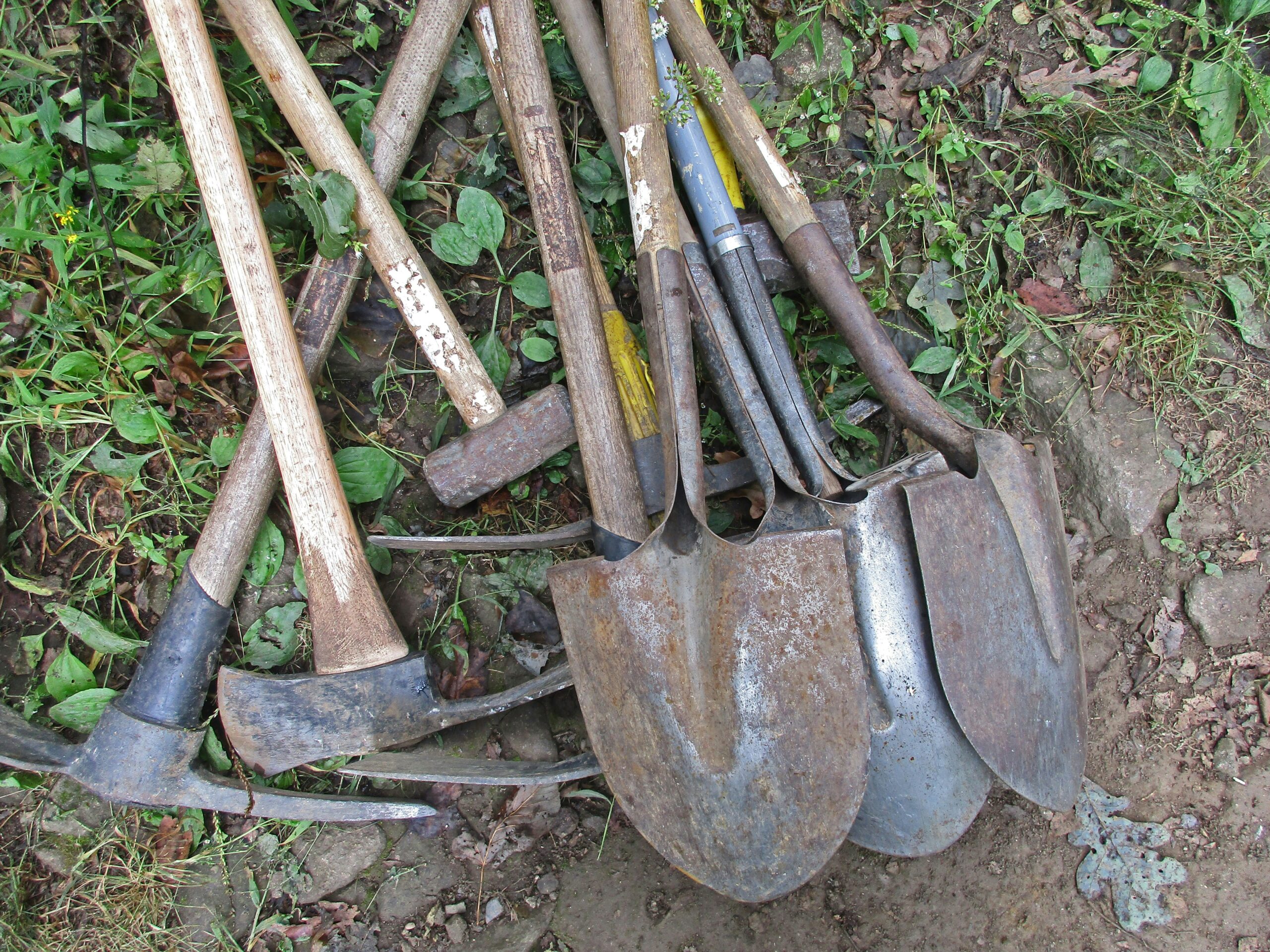
One wrong shovel scoop turned Aishtan Shakarian's scavenging trip into an international incident...
Shakarian was no cybercriminal. She was a 75-year-old in rural Georgia (the country), living in a small village outside the capital of Tbilisi.
And she did what plenty of folks across the former Soviet world did to get by – picked up whatever she could sell.
Scrap metal had become a staple trade in Georgia. Folks were after everything from the cast-iron lids that protected communication equipment... to old cables that powered Soviet nuclear testing sites.
If it still had value, somebody would try to haul it out of the ground and turn it into cash.
Shakarian would head into remote areas with simple tools like a spade and a handsaw. And she'd look for whatever she could collect – be it scrap or firewood.
According to Georgian officials, that's exactly what she was doing on March 28, 2011, when she struck an underground fiber-optic cable near the village of Ksani.
The cable ran along railway tracks in eastern Georgia...
It belonged to Georgian Railway Telecom and formed a critical part of the region's Internet backbone.
The moment Shakarian's shovel bit into the line, alarms started blaring in Tbilisi's telecom control rooms. Operators could see data traffic vanishing...
And just like that, the Internet went out across the South Caucasus.
Shakarian had no idea she'd knocked out connectivity. According to one interview, she later said she didn't even know what the Internet was.
Police and security teams traced the outage back to the damaged line and found her still out there near the cable route.
Most hackers probably dream of wreaking this much havoc...
Much of Armenia remained without service for nearly 12 hours. Parts of Georgia and Azerbaijan were disrupted, too.
The line Shakarian hit came from Bulgaria... crossed the Black Sea to the Georgian port of Poti... then forked through Georgia into Armenia and Azerbaijan. So Armenia's digital connection to the outside world ran through a chokepoint that it didn't control.
One poor scavenger with a shovel had exposed how fragile the whole system was.
Similar, smaller-scale incidents had taken place at least twice before. After Shakarian's mishap, even Armenia's largest provider agreed to think about diversifying its channels.
And diversification is what matters for investors today...
As data becomes more valuable, weak links become more expensive. Thanks to the growth of cloud computing and AI, we ask more of our networks every year. We're stuffing data centers with servers that move information constantly and at high speed.
The more we force through our digital arteries, the more dangerous every bottleneck becomes.
Here in the U.S., losing even one day of Internet access could cost companies roughly $11 billion. And to battle that type of risk, we've come to one obvious conclusion...
We need more fiber in the ground.
A single line can serve as a national lifeline for a while. But one rogue scavenger or potato farmer should not be able to disrupt an entire nation.
Regards,
Joel Litman
August 27, 2026
P.S. America is building out a much larger digital backbone now... in part because the data-center boom demands it.
And it's triggering a key "Launch Signal" indicator in a select group of stocks.
This same signal preceded the rise of Nvidia... the entire Magnificent Seven... and 448 of today's S&P 500 stocks. History shows it could double your money in the next 30 days or less – but only if you act fast. Full details here.