Emma Marble could hear the government coming through a fence post...
Life was lonely on her 160-acre homestead in Hidalgo County, New Mexico. Marble's nearest neighbors lived miles apart. Town was a long ride away.
And in 1899, news moved slowly... usually by horseback.
The arrival of the telephone decades earlier barely made a dent. Within a few years, telephone companies had strung copper lines through cities, offices, and wealthy neighborhoods. But that promise barely reached the frontier.
Farms were spread too far apart to be worth the investment. A city block could deliver dozens of paying customers. A mile of prairie might deliver one.
So farmers did what practical folks do when the official system leaves them behind...
They built their own.
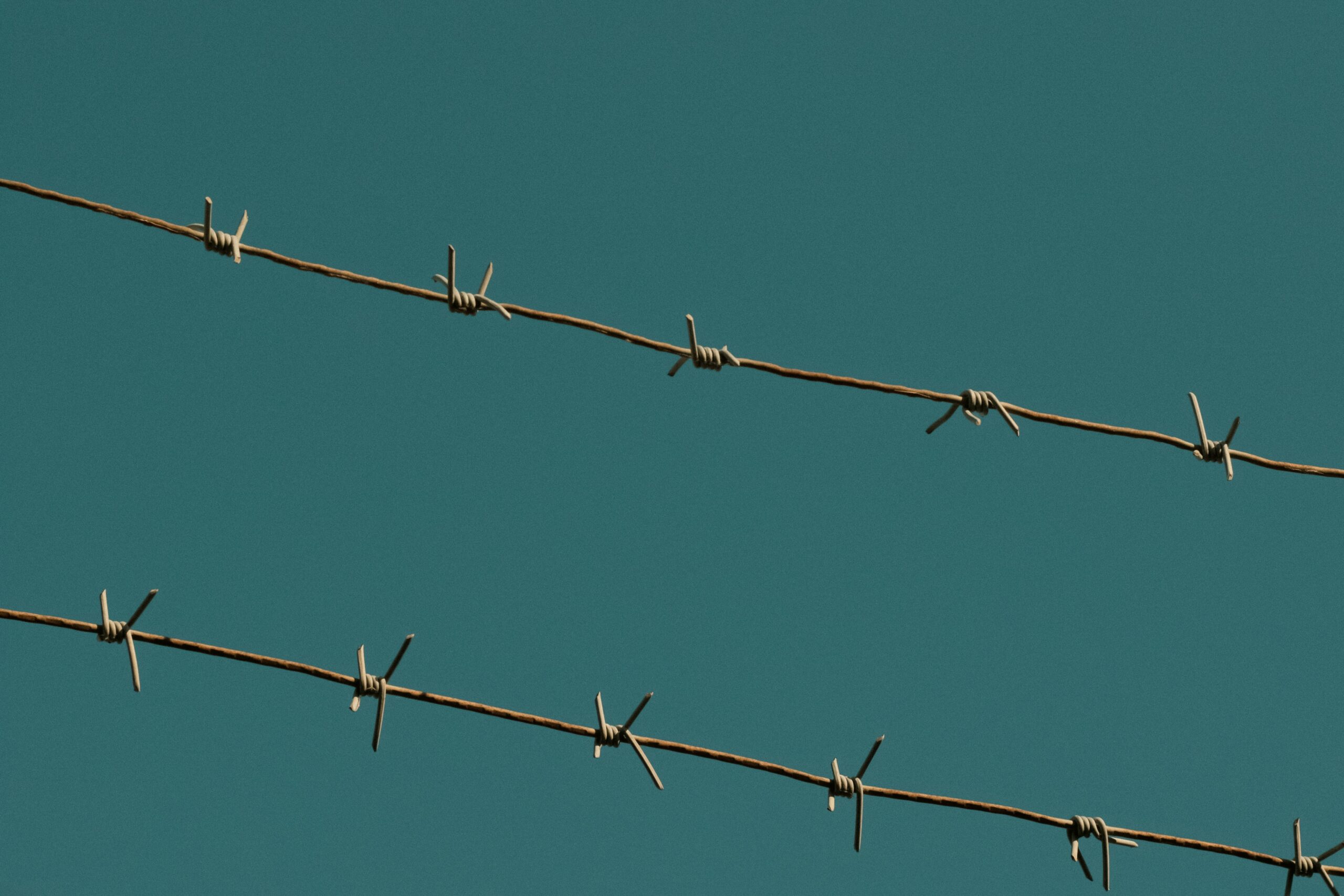
While copper wire was hard to come by, barbed wire was everywhere...
It fenced cattle and divided up property lines... stretching across farms, ranches, railroads, and lonely homesteads as far as the eye could see.
Frontier families soon realized they could rig a telephone to the fence line – and let the signal run along the same wire that kept livestock in place.
A call on these lines was a community event. The bell rang in every connected home. So folks created their own codes for who should pick up. One ring meant the call was for one particular family... while three rings was meant for the farmers next door.
For the isolated frontier, barbed wire became a lifeline to civilization. Someone with news from town could share it with every household on the circuit all at once.
It served as a warning system, too. Land inspectors made regular trips through Hidalgo County to make sure homesteaders were following the rules. Once an inspector was spotted on the main road, the warning moved from fence to fence and house to house. A "surprise" visit didn't stay surprising for long.
While the impromptu barbed-wire lines weren't perfect, it still beat no connection at all. The official network was too expensive. So resourceful Americans created the next best thing.
And that same entrepreneurial spirit is now reshaping the energy market...
Big Tech is facing its own version of the frontier's telephone problem. AI requires massive data centers packed with advanced chips. Those data centers need unprecedented amounts of power to run properly.
And our grid can't handle the demand.
Back in 2008, it took less than two years to connect to power after filing a request. It was up to three years by 2015. And by 2023, it was five years.
If that pace holds, some of today's projects won't be "lights on" until 2030 or later.
In the meantime, the projects that are connected are putting inordinate pressure on our grid.
Blackouts already cost the American economy $150 billion every year. If we don't upgrade the system, that number could shoot up to $15 trillion a year.
That's half of America's GDP. Our economy wouldn't survive that much pressure.
To solve this problem, Big Tech is looking somewhere else entirely... to what we call 'dark energy'...
Also known as behind-the-meter power, dark energy is a way to circumvent the long wait times that come with grid connection. In practice, it often looks like a "microgrid" built next to the data center.
Microgrids can bring a data-center campus online years earlier than a traditional interconnection... so AI development can start now instead of later.
There are at least 46 behind-the-meter data centers in the U.S. About 90% of these projects were launched in 2025 alone. And they have a combined 56 gigawatts ("GW") of planned capacity. That's roughly 30% of the total planned capacity for these sites.
Most investors are still focused on the obvious AI winners. But none of that matters if there's no power to turn the lights on.
My team and I teamed up with our sister company, Chaikin Analytics, to identify four dark-energy stocks that are helping save the AI revolution – and America's economy.
All of them have strong earnings... and all of their stocks are starting to break out. But as dark energy goes mainstream, shares won't be a good deal for much longer. Learn how to get their names – plus two free "do not buy" recommendations – right here.
The AI energy bottleneck is coming to a head. We only have a short window of time to buy in for the highest possible upside. Let's not waste any time...
Regards,
Joel Litman
May 12, 2026