Europe once looked like the natural home for the next wave of nuclear innovation...
France already runs one of the world's most nuclear-heavy grids. Its engineers have been around a pro-nuclear government for most of their lives.
So it's no surprise the country – and Europe as a whole – is full of nuclear startups. There are currently 226 startups across Western Europe.
But a different gravity is now pulling the market elsewhere. European reactor startups are showing up in the U.S. in droves. It's turning the small-reactor race into a tougher fight for American startups.
And it's creating a bigger win for a specific subset of nuclear competitors...
The U.S. is becoming the nuclear energy main stage...
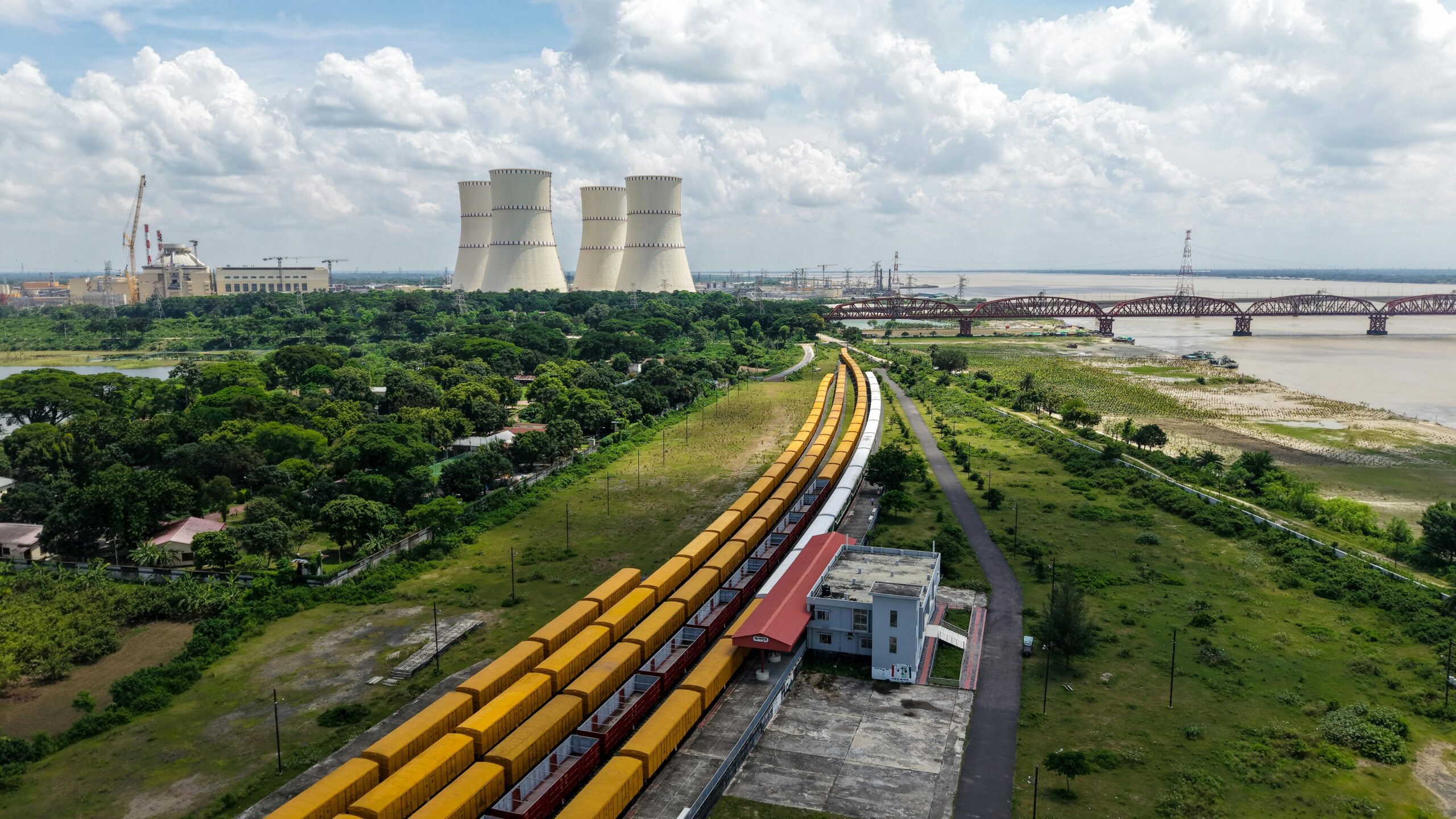
Again, France sits at the center of Europe's nuclear ecosystem. It has spent decades building up the second-largest nuclear reactor fleet in the world (behind only the U.S.). And it generates about 70% of its power from nuclear energy.
French teams aren't resting on their laurels. They want to build smaller, faster reactors. They're having a lot of trouble overseas, though...
Energy startup Newcleo, for example, is trying to build reactors that use nuclear waste as a fuel. It received next to no support in the U.K. when it was trying to build there.
Another startup, Naarea, is developing a salt-based cooling system for nuclear reactors. It nearly went out of business last year because it only received about €110 million in funding in the past few years. It needed to raise about €2 billion.
Both companies are now looking to expand into the U.S. instead.
There's a lot more investor demand for nuclear startups on this side of the Atlantic...
Just look at NuScale Power (SMR) and Oklo (OKLO) – two major American nuclear startups that have gone public since 2022.
NuScale and Oklo specialize in a type of compact mini-reactor called a small modular reactor ("SMR"). Neither has a finished, government-approved offering yet. Oklo hasn't even generated a dollar of revenue.
And yet, they each were able to raise about $400 million by listing on the U.S. stock market.
That level of support is attracting international companies... which is great for the nuclear industry, but bad for competition.
For American SMR developers, the trend is creating a new kind of pressure. There's no guarantee Oklo or NuScale will "win" the SMR race. Nobody seems to have a clear lead.
But increased competition leads to better chances that someone will develop a successful SMR.
And that's great for nuclear suppliers...
Many advanced designs rely on high-assay low-enriched uranium ("HALEU") – which burns hotter and more efficiently than the uranium used in legacy reactors.
The U.S. is trying to secure HALEU through the Department of Energy's HALEU Availability Program. And that program only exists because fuel supply sits near the top of the bottlenecks list.
Russia is the global leader in enriched uranium supply. It controls 43% of uranium enrichment capacity. The U.S. controls next to nothing.
Getting a reactor approved is one challenge. Keeping it fed is another.
Fuel is only one chokepoint, though. Specialized components are hard to come by. Only a handful of companies are making them.
In short, the competitive threat to reactor startups... turns into a tailwind for the reactor supply chain.
We've seen this play out in a number of reactor-supply stocks already.
Nuclear-component maker BWX Technologies (BWXT) has risen 75% in the past year alone. Centrus Energy (LEU), which specializes in uranium enrichment – including HALEU – is up 130%.
And uranium provider Cameco (CCJ) has soared 135% since last February.
These businesses don't care who 'wins' the reactor design race...
They're all winning already.
SMRs are turning into a crowded room. European entrants raised the bar for quality... the number of credible designs. For investors, choosing a single winner is a big, fat headache.
But that same expansion is pushing money toward one set of suppliers. These companies rake in cash no matter who is testing materials or building pilot reactors.
And that cash doesn't stop once a reactor goes operational. Plants will still need fuel, parts, and maintenance for decades to come.
It's getting harder for reactor developers to reach the winner's circle. But for the businesses that keep things running, the spending base is getting larger. This is where you should be focused today.
After all, the smartest bet is the one that gets paid... no matter the outcome.
Regards,
Joel Litman
February 12, 2026