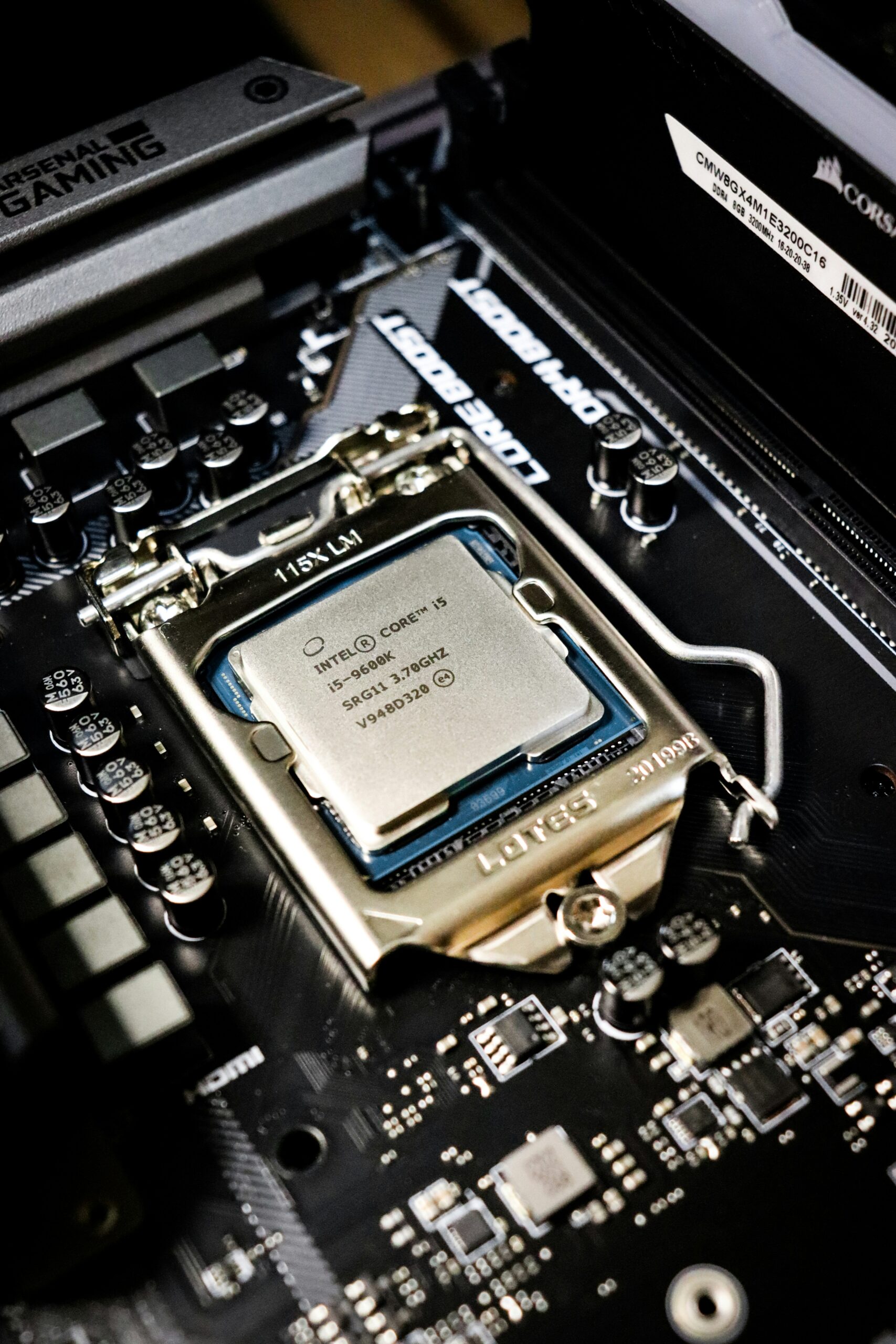
The processing king created its own worst enemy...
But it didn't have a choice.
IBM (IBM) was at the top of the '80s-era computer world. Its machines were already the gold standard in office settings. And as technology got cheaper, it was finally possible to sell computers straight to consumers.
The tech giant always made its own parts – from the chips to the hardware to the software. But building an entire personal computer was a whole different beast.
With the competition racing to catch up, IBM couldn't afford to wait. So it turned to a leading name in computing power... a chipmaker known as Intel (INTC).
Intel agreed to build the "brain" of IBM's first PC. But the big win came with one condition...
IBM had never outsourced before. It was anxious about putting that much trust in a single supplier. So it told Intel that its machine couldn't exist in a vacuum.
It had to find one other supplier that could make chips compatible with its processor.
Enter Intel's solution – and its big mistake...
Intel reached out to a credible second-source supplier called Advanced Micro Devices (AMD)...
In 1982, the companies hatched an agreement that gave AMD access to certain Intel designs... so it could build compatible chips for the new PCs.
AMD signed up to be a backup plan.
Intel signed over the keys to the castle.
Within a few years, the PC market took off. PC sales exploded from $5.4 billion in 1982 to $30 billion by 1990.
Since Intel started as the only game in town, every PC used its processing architecture... known as x86. So every competitor should have been forced to use Intel's PC "brain." And they should have had to go through IBM to do it.
But AMD had the blueprint. The competition didn't need Intel at all. They could go straight to AMD... whose chips were just as good and cost far less.
IBM started the decade with a dominant 80% PC market share. By the early '90s, it owned only 20% of the market.
And now, AMD has its sights set on its next great competitor...
'Magnificent Seven' giant Nvidia (NVDA) has been the undisputed leader in AI chips for years...
Its processors, software, and developer ecosystem have set it apart. It's the default choice for companies building large AI systems.
But that lead isn't as secure as it once was.
Nvidia's AI-accelerator market share peaked around 87% in 2024. Estimates for this year put it between 75% and 80%.
That doesn't mean Nvidia is shrinking. Its sales are still hitting records. The AI-chip market is simply growing faster than any one company can supply it... and customers don't want to depend on a single supplier.
Just like IBM in 1981, today's biggest AI buyers are nervous about trusting their future to one chipmaker.
In October 2025, OpenAI signed a deal with AMD for 6 gigawatts' worth of its AI chips. The first gigawatt, built on AMD's new MI450 chips, is slated to come on line in the second half of this year.
Oracle (ORCL) plans to deploy 50,000 of those same chips. And Facebook owner Meta Platforms (META) has signed its own multi-gigawatt deal with AMD.
Then there are the chips Nvidia's customers are designing for themselves. Google parent Alphabet (GOOGL) has its tensor processing units. Amazon (AMZN) has its Trainium chips. And Broadcom (AVGO) is helping several tech giants design custom AI chips of their own.
Every one of those chips is a slice of the market that doesn't go to Nvidia.
For years, investors treated 'AI chips' and 'Nvidia' as the same trade...
If you owned Nvidia, you owned the AI boom.
But that's not the case anymore.
Nvidia will likely remain a giant for years. Its software ecosystem is still a powerful advantage.
However, the AI build-out is now big enough to support more than one winner. AMD is landing contracts that would have gone to Nvidia by default just a few years ago. And custom-chip designers are carving out their own share of the spending.
Intel learned the hard way that a backup supplier can become a serious rival. Nvidia may be learning the same lesson today. And so will investors.
There are more places to profit from AI than just Nvidia... even within the chip industry.
Regards,
Joel Litman
November 4, 2026