When Geoffrey Hinton sees a radiologist, all he thinks of is Wile E. Coyote...
Hinton is one of the key architects of modern AI. His work on neural networks helped turn machine learning from an academic curiosity into a deep-learning boom. Now, it powers everything from basic image recognition all the way to chatbots.
In short, he's partially responsible for the breakthrough that lets computers "learn" like humans.
This man knows what he's talking about when it comes to AI. And in 2016, he believed one medical profession was about to take a nosedive... "Looney Tunes" style.
According to Hinton, 10 years ago, radiologists were acting an awful lot like the infamous cartoon coyote. They were already over a cliff. They just hadn't looked down yet.
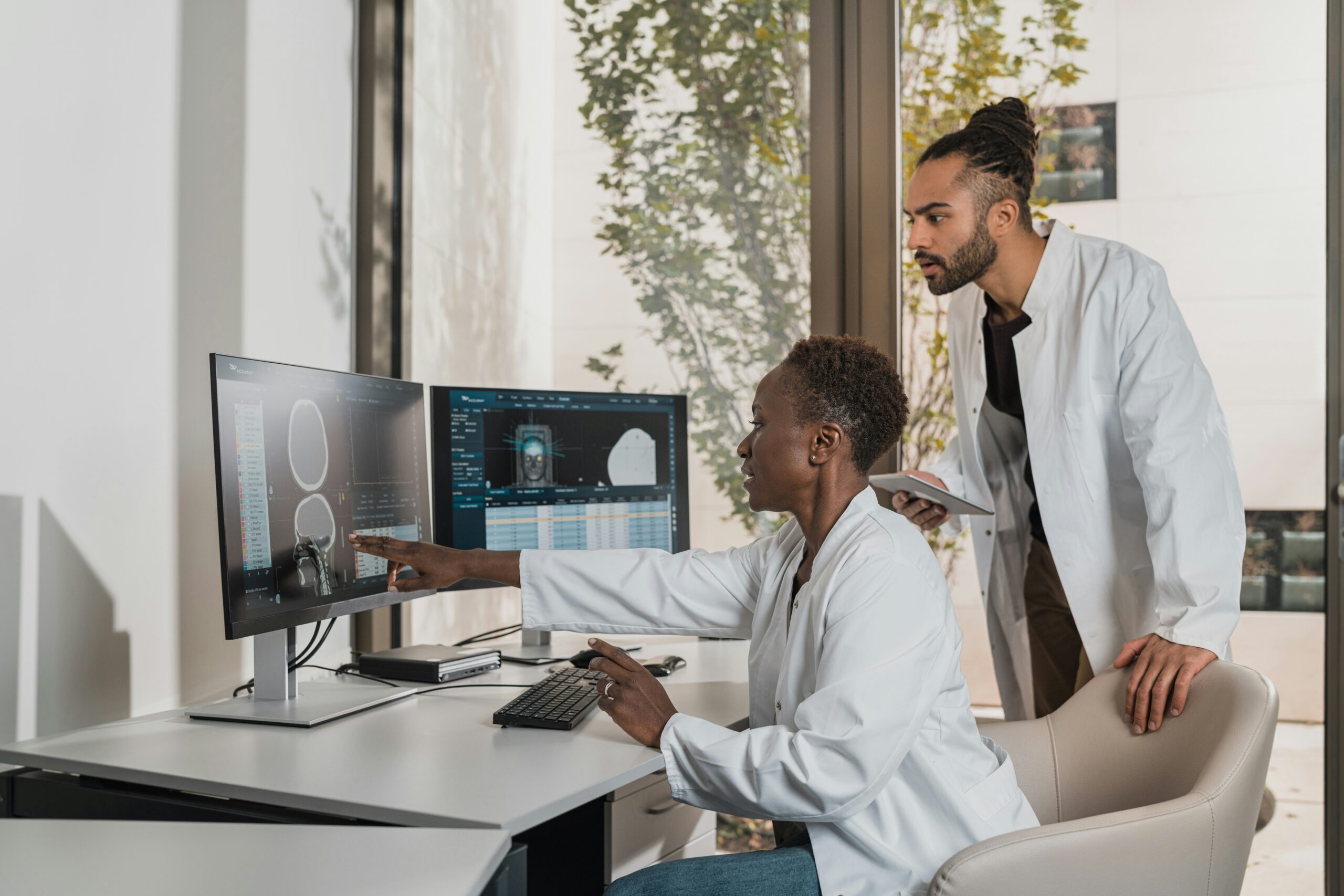
In the simplest terms, radiology is image analysis...
Specialists look at patient scans and diagnose injuries and illnesses. And AI thrives on image analysis.
Feed a model millions of scans... let it learn the patterns tied to identifying tumors or fractures... and eventually it should outperform a human eye.
A machine doesn't get tired on the night shift. Nor does it lose focus after its hundredth scan. AI can compare one image with a mountain of prior examples in an instant.
Hinton predicted that within five years, by 2021, deep learning would do the job better than a human radiologist. Even if it took a full decade, he said the direction was clear. Radiologists were doomed.
A lot of those very radiologists felt the same chill. The field had already lived through a few earlier sky-is-falling moments. Digital imaging and computer-aided detection were both considered major threats. This one felt bigger.
And to be fair, AI has flooded the field. Radiology has become one of the busiest AI proving grounds in all of medicine.
But even the brightest minds can be wrong sometimes...
And that includes Hinton.
Algorithms do take a first pass at flagging urgent scans. Some PET-scan reconstruction tools can shrink scan times from 20 minutes to five. One kidney-volume offering now saves 15 to 30 minutes per case.
But human radiologists aren't looking for their next careers. In fact, they're more in demand than ever.
American diagnostic radiology residency programs offered a record 1,208 positions last year... up 4% from 2024. Vacancy rates hit all-time highs.
Radiology ranked as the second-highest-paid medical specialty in the country in 2025. Average annual income sat around $520,000 – almost 50% above the 2015 average.
The Bureau of Labor Statistics projects radiology employment will grow 5% from 2024 to 2034, ahead of the 3% average across all occupations.
At the Mayo Clinic alone, the radiology staff has grown 55% since Hinton's warning.
AI got very good at one slice of the job. But radiologists do a lot more than one slice...
Reading the image is only the first step. In one study, only 36% of staff radiologists' time was spent on direct image interpretation. These folks also advise surgeons and physicians based on their findings. They still have to oversee exams, too.
Investors often focus on how AI can replace one task. And they often assume that means AI can replace an entire role... or even an entire company.
But it's rarely that simple.
The market has slapped many companies with the "loser" label because of AI...
Folks see a chatbot or a reasoning model... and assume every software company is about to get bulldozed.
That kind of irrational panic creates some of the best opportunities in the market.
When investors price in a company's destruction before AI has disrupted its business, the stock becomes cheap relative to what the business is earning. That has led to a growing disconnect between the strong earnings and discounted prices of these companies.
Hinton's prediction about radiology is now a decade old. The profession didn't just survive – it thrived. And years from now, many of the other industries "doomed" by AI will likely tell a similar story.
Regards,
Joel Litman
September 17, 2026