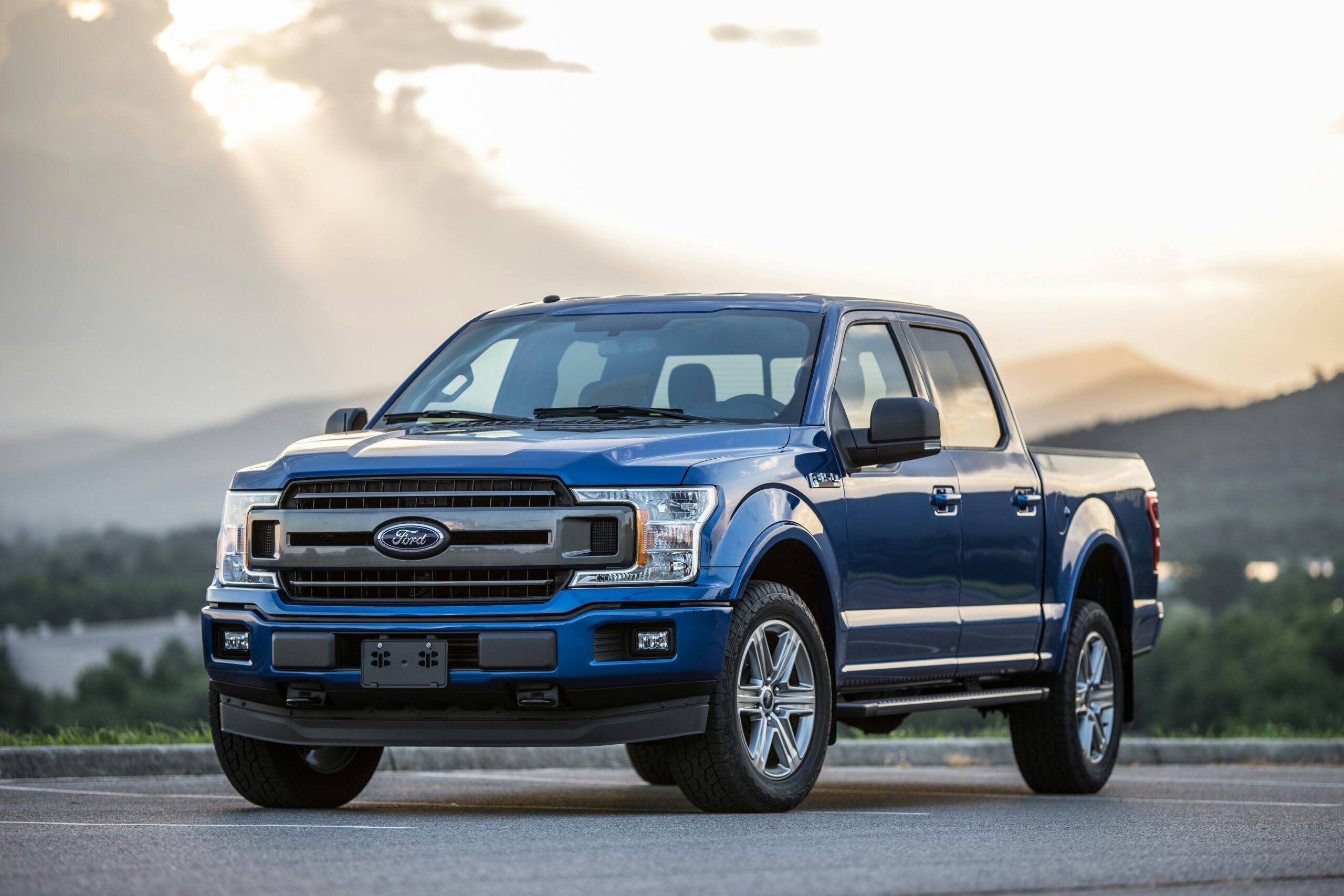
Ford Motor (F) was bleeding money fast...
It had been losing market share to Japanese automakers for a decade. Its cars were more expensive and lower quality than the likes of Toyota Motor (TM) and Honda Motor (HMC).
In 2005, the major credit-ratings agencies downgraded Ford's debt to "junk" status. And in 2006, it posted a $12.7 billion loss for the year – the worst in its 103-year history.
So the automaker's new CEO Alan Mulally knew he needed to take action fast. So he met with a group of bankers... to secure his "war chest."
The $24 billion loan would fund a turnaround plan called "The Way Forward." It aimed to simplify all aspects of Ford's business by providing fewer car models. The goal was to make manufacturing easier and help consumers better understand what to buy.
But there was a catch...
In exchange for fresh credit, Mulally pledged nearly all of Ford's assets...
If Ford couldn't pay lenders back, they could literally take the sign off the company's headquarters.
It was a huge risk. But Mulally felt he had no choice.
And as it turned out, his timing proved critical...
Within two years, the global financial crisis was in full swing. U.S. vehicle sales collapsed by the millions amid one of the worst recessions in recent memory.
Ford's American peers, General Motors (GM) and Chrysler, ran out of money. With no private financing available, both entered Chapter 11 bankruptcy in 2009.
The situation for Ford was just as challenging. It lost almost $2 million a day during the worst of the downturn. But with its $24 billion loan secured, it had the liquidity to stay afloat.
And it didn't stop at "not going under." Ford took advantage of this edge over the competition.
It ran ads emphasizing that it was the only Detroit automaker to avoid bankruptcy or federal rescue money... and launched new products as fast as it could.
Ford's resilience resonated with consumers...
By the second half of 2009, the company became profitable again – and it stayed that way. Ford posted 19 consecutive quarters of profits over the next five years. It paid off its 2006 loan, restoring its credit rating to investment-grade.
The company even held a symbolic ceremony to reclaim the physical blue-oval logo from its lenders.
Investors were rightly impressed with Ford's ability to weather the Great Recession.
But this year, the company has faced its newest threat: soaring oil prices.
Since the U.S. invaded Iran in February, Ford's stock is down about 17%. High oil prices hurt consumers... and make folks less likely to buy a new car.
Rising fuel costs already doomed budget airline Spirit Airlines...
And this could have investors worried that this is the start of a fuel-exposed bloodbath.
We'll admit that we're not thrilled about Ford's near-term prospects. The company was far from profitable in 2025, generating $2.8 billion in Uniform losses. But that doesn't mean it's next in line for bankruptcy, either...
Ford and Spirit are different businesses when it comes to fuel exposure. Spirit had almost no ability to absorb energy cost shocks. It had thin margins and no pricing power, leaving very little buffer.
Ford, on the other hand, generates revenue across a diversified lineup of trucks, SUVs, and commercial vehicles. Its highest-margin products are the ones consumers are least likely to abandon even when gas prices rise.
Ford is expected to return to profitability in 2026 with $5.9 billion in Uniform earnings. And it already has roughly $22 billion in cash. For a $48 billion market cap company, that's a sizable buffer to sit tight through the volatility.
Regards,
Rob Spivey
May 7, 2026