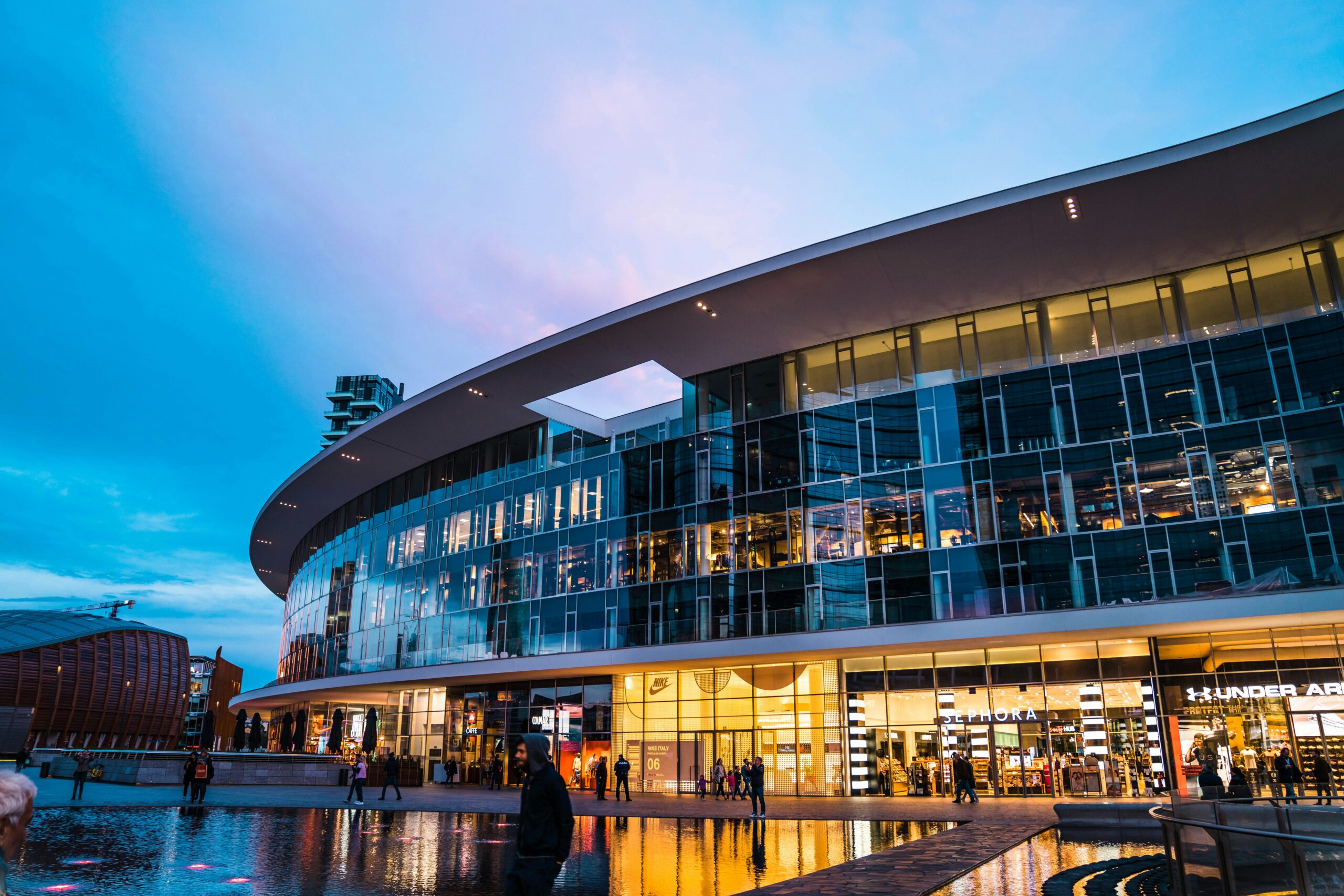
Santa Claus recently sat on a velvet throne in a hallway lined with empty shops...
It was a slow afternoon at Neshaminy Mall outside of Philadelphia. Santa had seen just three visitors all day.
This was a far cry from the hustle and bustle of the 1960s. By December 2024, nearly half the mall's stores were vacant.
Neshaminy Mall sold for $27.5 million that year... barely more than the cost of building it almost 60 years ago. (The new owners plan to tear most of it down.)
Less than 30 miles away, King of Prussia Mall looks a lot different...
Luxury stores like Christian Dior and Chanel stand side by side. Netflix House brings in crowds for escape rooms and virtual-reality experiences.
King of Prussia generates more than $1.5 billion in annual sales. And between 2024 and 2025, holiday foot traffic rose by 10%.
It might seem like a tale of two shopping malls... where one clearly outshines the other. But, as we'll explain, even "winner malls" carry hidden risks.
Location, location, location...
This old real estate adage still applies today.
Class C and D malls are located in rural areas with high vacancy rates. Their occupancy fell 26.4 percentage points from 2016 to 2019.
Class A and B (or premier) malls are centrally located, with premium tenants. Their occupancy dipped just 1.1 percentage points.
Sales per square foot ("SPSF") data tells the same story... Class C malls often run below $400 SPSF. Class A malls, on the other hand, can bring in more than $1,000 SPSF.
That's why mall owners, like King of Prussia owner Simon Property (SPG), keep leaning into Class A properties.
Beginning in the 1950s, malls relied on "anchor" tenants...
These massive department stores pulled in droves of customers.
Neshaminy Mall is anchored by Boscov's and AMC Theatres. King of Prussia's anchors include Macy's (M), Nordstrom, and Bloomingdale's.
The anchor model started breaking down in the 2000s, though... when e-commerce became a dominant retail player.
This obviously ramped up during COVID-19. Today, about 20% of all retail sales take place online. And even premier malls are having trouble in this economy...
Simon Property, for example, only owns Class A malls. And yet, its top two tenants have either contemplated bankruptcy (Macy's) or declared bankruptcy (JCPenney).
Simon Property has leased roughly 15% of its total retail footprint to these struggling department stores.
Part of the problem is many U.S. malls are behind on their loan payments...
Before the pandemic, delinquency rates for mall loans were lower than the retail average.
They consistently fell below 5%. Other retailers skipped payments as much as 10% of the time.
That trend has now flipped... Mall delinquency rates skyrocketed to 25% in 2020, and they're still hovering around 18%. Other retailers are close to the 5% mark.
Take a look...

High delinquency rates can only last for so long before the industry breaks down...
Of Simon Property's top 10 tenants in 1993 (the year it went public), only two still exist today. The others all went out of business.
Shopping malls aren't the hotspots they used to be...
In the 1980s, there were roughly 2,500 malls in the U.S. Today, there are about 700.
And as we noted, Class A and B malls are just as vulnerable as their Class C and D counterparts.
Even the best ones lean on tenants with shaky foundations. Macy's – a key anchor throughout the U.S. – is planning to close 150 stores by the end of the year.
So even winner malls like King of Prussia aren't doing great.
Keep an eye on these developments... And don't rush into so-called "rebound" stories.
Premium mall owners want you to think they're doing better than ever. We aren't convinced.
Regards,
Joel Litman
January 15, 2026