By the time the SR-71 rolled out of Skunk Works, the CIA had built an entire supply chain of misdirection...
In the 1960s, Lockheed Martin's secretive division was building a state-of-the-art spy plane to gather intelligence on the Soviets.
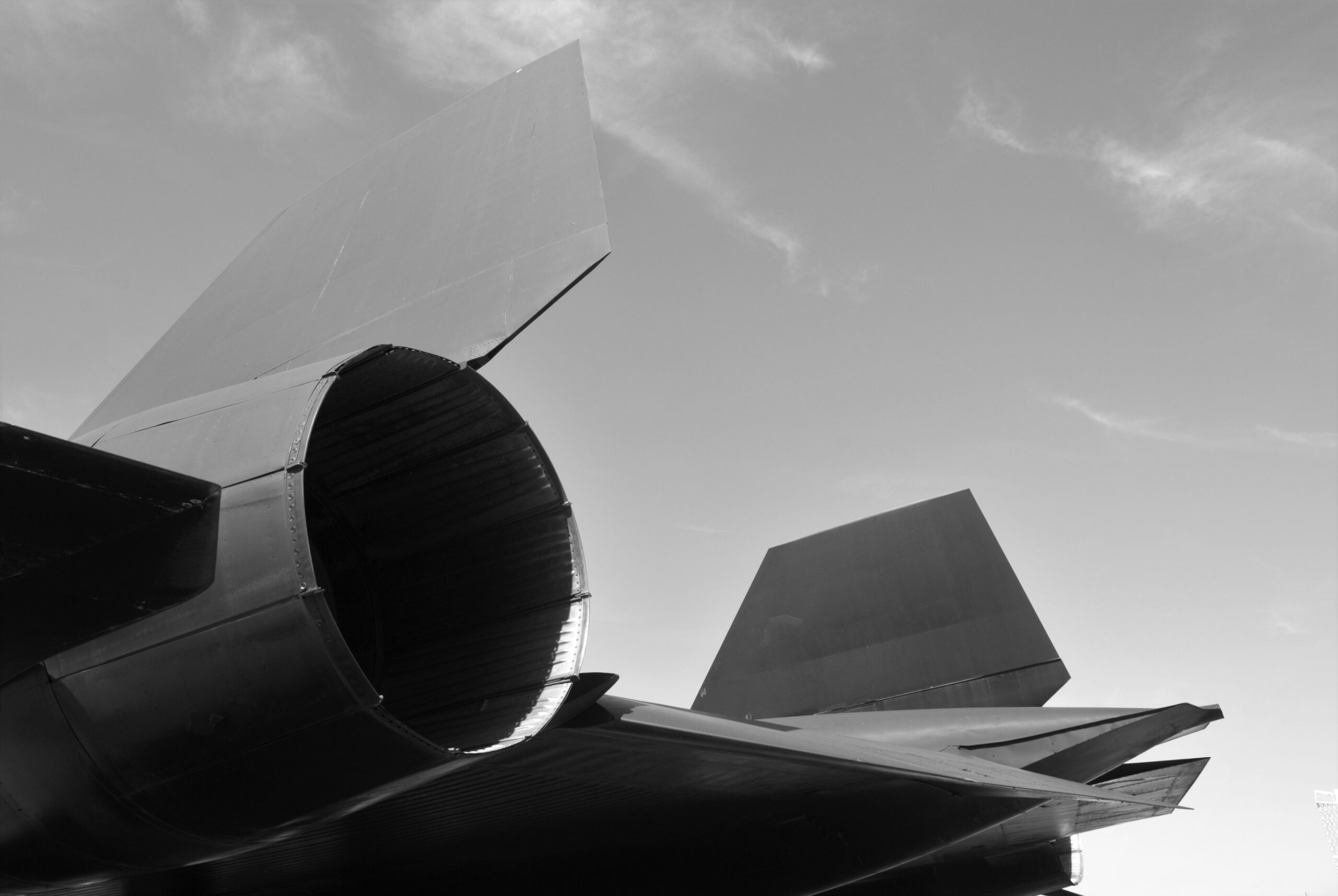
The SR-71 Blackbird could fly faster than a bullet and higher than any missile could reach. To survive Mach 3 speeds, the aircraft had to be built almost entirely from titanium.
There was just one problem...
Most of the world's titanium came from the very country the SR-71 would be spying on.
The CIA couldn't exactly call up the USSR and ask for help. So the agency got creative. It used a series of shell corporations to buy up Soviet titanium and ship it straight to the U.S.
These "dummies" operated under mundane names. On paper, they looked like ordinary businesses operating within legal bounds... including some alleged makers of commercial kitchen equipment like pizza ovens.
In reality, they were part of a sprawling ruse to use the Soviets' own commodity against them.
Lockheed's procurement team worked hand-in-hand with U.S. intelligence operatives...
Orders were routed through layers of intermediaries, making it nearly impossible to trace the shell companies' final customer.
And Soviet metallurgical firms, hungry for hard currency, obliged without suspicion.
Once the titanium crossed U.S. borders, it was quietly funneled into Lockheed's secret Skunk Works facility in California. To say the operation was successful is an understatement...
Nobody had ever built an aircraft model from this much titanium before. The SR-71 flew thousands of missions and was never shot down.
By the time the model was retired in 1990, it had earned every speed and altitude record a manned aircraft could hold.
And although the Soviets didn't realize... it was all thanks to them.
This Cold War tale might read like something out of a spy novel...
But it's actual spy history. And it points to a much simpler truth...
Strategic materials are essential to national security.
Governments will go to extraordinary lengths to secure resources – even if it means standing up a string of fake pizza-oven businesses.
Materials like titanium still underpin today's critical defense and overall aerospace infrastructure. They're used in everything from next-generation fighter jets... to hypersonic glide vehicles... to naval propulsion systems.
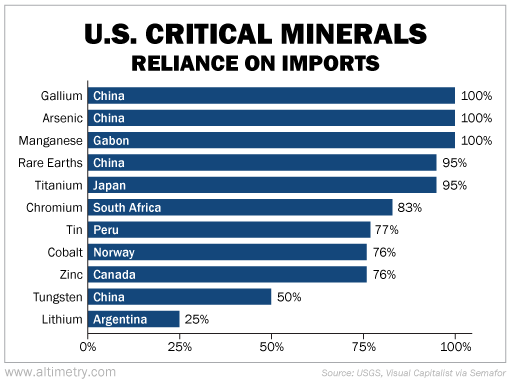
And even today, the U.S. still isn't in control of several critical materials. Certain minerals we need for semiconductors, like gallium and arsenic, are still 100% imported from China...
We're in an era of rising global conflict and renewed industrial competition. And stable supply is everything.
The U.S. is working on building up its supply chain for these materials... so it doesn't have to resort to fake pizza-oven businesses again.
This trend is a boon for the companies that deal with those materials.
Earlier this month, the U.S. hosted a critical minerals 'ministerial'...
Politicians hosted delegations from 54 countries and the European Commission.
They discussed ways to beef up critical minerals supply chains. And the U.S. announced several initiatives to help America source more materials from its allies.
We're preparing to spend tens of billions of dollars investing in these projects. That will mean a huge boost for mineral producers.
Keep an eye on this space. The U.S. is going to be a major buyer in the coming months.
Regards,
Rob Spivey
February 17, 2026