Microsoft (MSFT) walked away from Britain's flagship AI data-center project last month...
The site – located in Loughton, Essex – is currently being developed and spearheaded by Nscale, a London-based "neocloud."
Neoclouds are a newer type of company. They build huge AI-focused data centers and then rent out the computing power to tech companies developing and running their own AI.
The Loughton project is forecast to provide an initial 50 megawatts of computing capacity and help cement the U.K.'s position as a global leader in AI.
It was supposed to begin operating in early 2027, with Microsoft as the site's main customer. More than 23,000 AI chips from chipmaker Nvidia (NVDA) were lined up to support Microsoft's cloud business.
Then, on October 19... Microsoft pulled out.
It's an awkward situation for Nscale. The company is currently trying to raise up to $30 billion in an initial public offering. And investors are already wary of the risks surrounding the AI build-out.
Many folks took the news that Microsoft was pulling out of the project as a sign that the AI boom is slowing.
But as we'll explain today, the problem isn't a lack of demand. It's a lack of electricity...
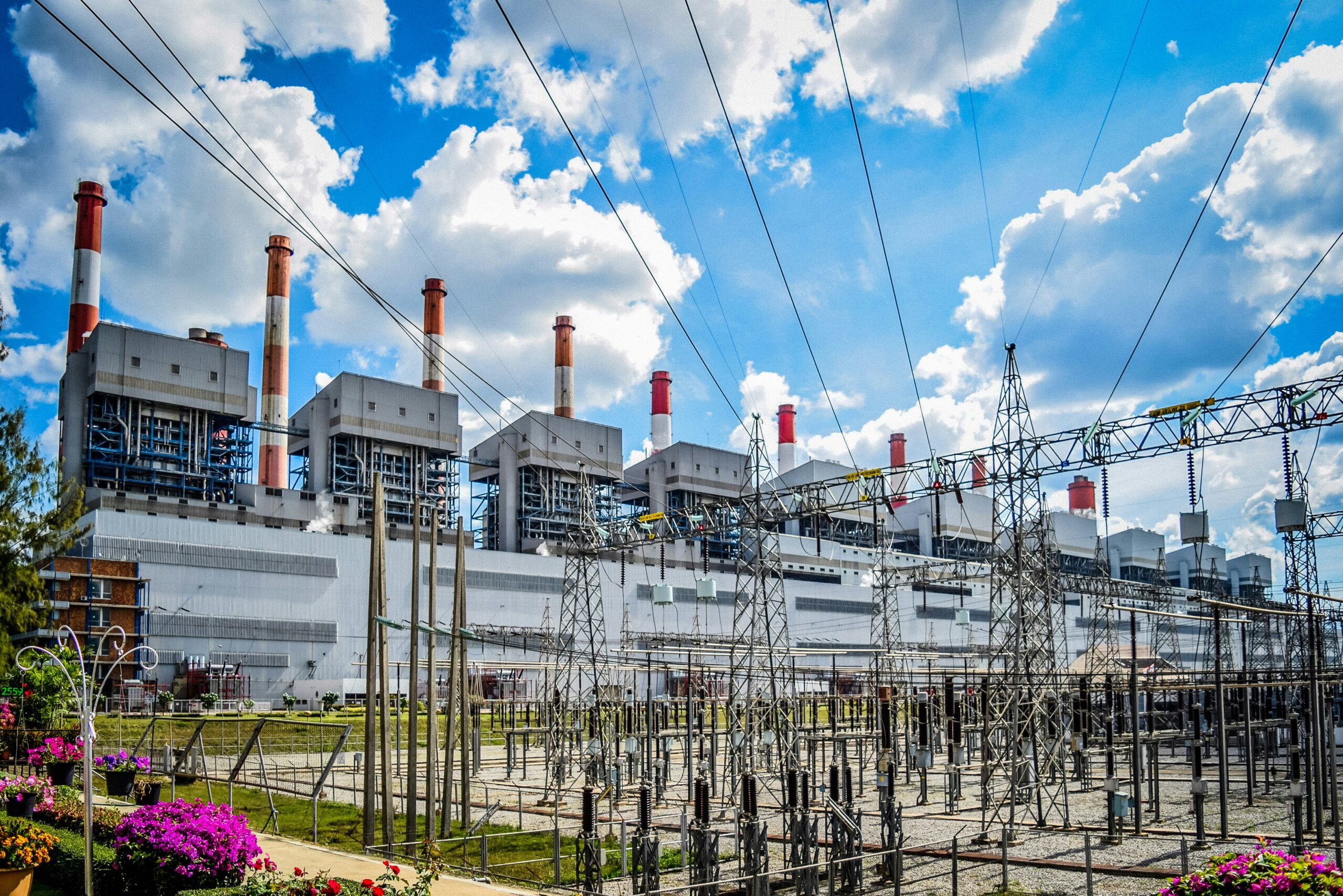
The grid can't keep up with AI's appetite for power...
Nscale expected the flagship data center to be connected to the local power grid and fully operational by the first quarter of 2027.
Instead, grid officials told the company they wouldn't be able to supply power to the site until sometime in the 2030s.
Nscale blamed an "unfortunate London-wide grid issue" for the delay. And it said it remains committed to the project and would explore other sources of electricity. It also stressed that its other contracts with Microsoft aren't affected.
However, just last week, Microsoft announced that it wouldn't be expanding an ongoing computing agreement with Nscale at a data center in Texas.
The deal, reportedly worth tens of billions of dollars, would have more than doubled the size of the contract's existing computing capacity.
And while Microsoft has stated that the decision to not expand was made months ago – and that its Texas contract remains intact – the move again comes down to power constraints (as well as regulatory hurdles).
You see, a big data center can't run on a normal electrical hookup... the kind that supplies power to a home or small business. Before it can switch on, the local utility has to build or upgrade the substations and power lines that'll carry electricity to the site.
Thanks to the AI boom, there's a huge backlog of companies and projects waiting their turn for more power.
And that line is getting long everywhere.
According to energy-research firm Currence, which tracks large data centers around the world, at least 16 gigawatts of capacity were scheduled to come online in 2026. That's equivalent to about 16 large nuclear reactors.
However, it now expects roughly 30% to 50% of that capacity to be delayed... with power shortages and backlogs for electrical equipment largely to blame.
Microsoft isn't willing to wait for the grid to catch up...
And it's not alone. Other tech and AI companies are finding ways to generate their own electricity or secure power outside the traditional grid.
As we discussed in September, Elon Musk's xAI – now part of his rocket company SpaceX (SPCX) – uses its own gas turbines to power its Colossus data centers in the Greater Memphis area.
For Colossus 2 specifically, xAI set up 27 gas turbines at a nearby location. Together, they can produce up to 495 megawatts of power, about as much as a conventional power plant.
Of course, this approach has its own challenges...
In April, a civil rights group sued xAI for running the turbines without certain air permits. Musk's xAI argued that the turbines were temporary, mobile power sources – and therefore exempt from the specified permits.
A federal judge refused to throw out the case, allowing the lawsuit to proceed. But xAI has been granted approval to continue its operations at Colossus 2 while the legal battle plays out.
In the meantime, xAI has turned this power advantage into a business opportunity...
In May, it started officially selling computing capacity commercially, with Claude maker Anthropic as its first customer.
Anthropic has agreed to pay xAI $1.25 billion a month through May 2029 (roughly $15 billion a year) for computing power. The deal originally included just the Colossus 1 data center but has since expanded to include Colossus 2 as well.
And here's where things get interesting...
Anthropic is another one of Nscale's biggest customers. Combined, Microsoft and Anthropic account for around 85% of Nscale's contracts.
Again, Microsoft has stated that its contracts with Nscale remain in place. Anthropic also still has deals with Nscale. It signed a $45 billion agreement with the neocloud just this past August to get power from its West Virginia data-center campus.
But the writing is on the wall. Nscale risks losing customers to competitors that already have the power and computing capacity in place.
Don't mistake this for a demand problem...
The grid simply isn't adding power fast enough. And we can expect more headlines about stalled data centers in the future.
When the next one hits, pay attention to why the project slipped. If lack of electricity is the holdup, the customer is now likely looking elsewhere for computing power. And it'll sign with whoever can deliver it soonest... just as Anthropic did with xAI.
That gives companies that can bring their own power on line – or help other companies do so – a big edge.
If you're investing in the AI build-out, focus on those businesses... because every project the grid holds up just sends more customers their way.
Regards,
Rob Spivey
November 9, 2026